.webp?width=1250&height=781&name=Welsh%20dragon%20(2).webp)




When you're designing components for bespoke machinery, choosing the most efficient manufacturing method is vital for both performance and budget.

Two of the most common processes in precision engineering are milling and turning.
While both utilise Computer Numerical Control (CNC) technology to produce high-quality components, they operate on very different mechanical principles.
Understanding the difference between CNC milling and CNC turning is the first step in ensuring your parts are produced with the highest level of accuracy and cost-effectiveness.
This blog post will guide you through the processes and their distinctions so you can determine which is the best fit for your needs.
The Core Difference Between CNC Turning and CNC Milling
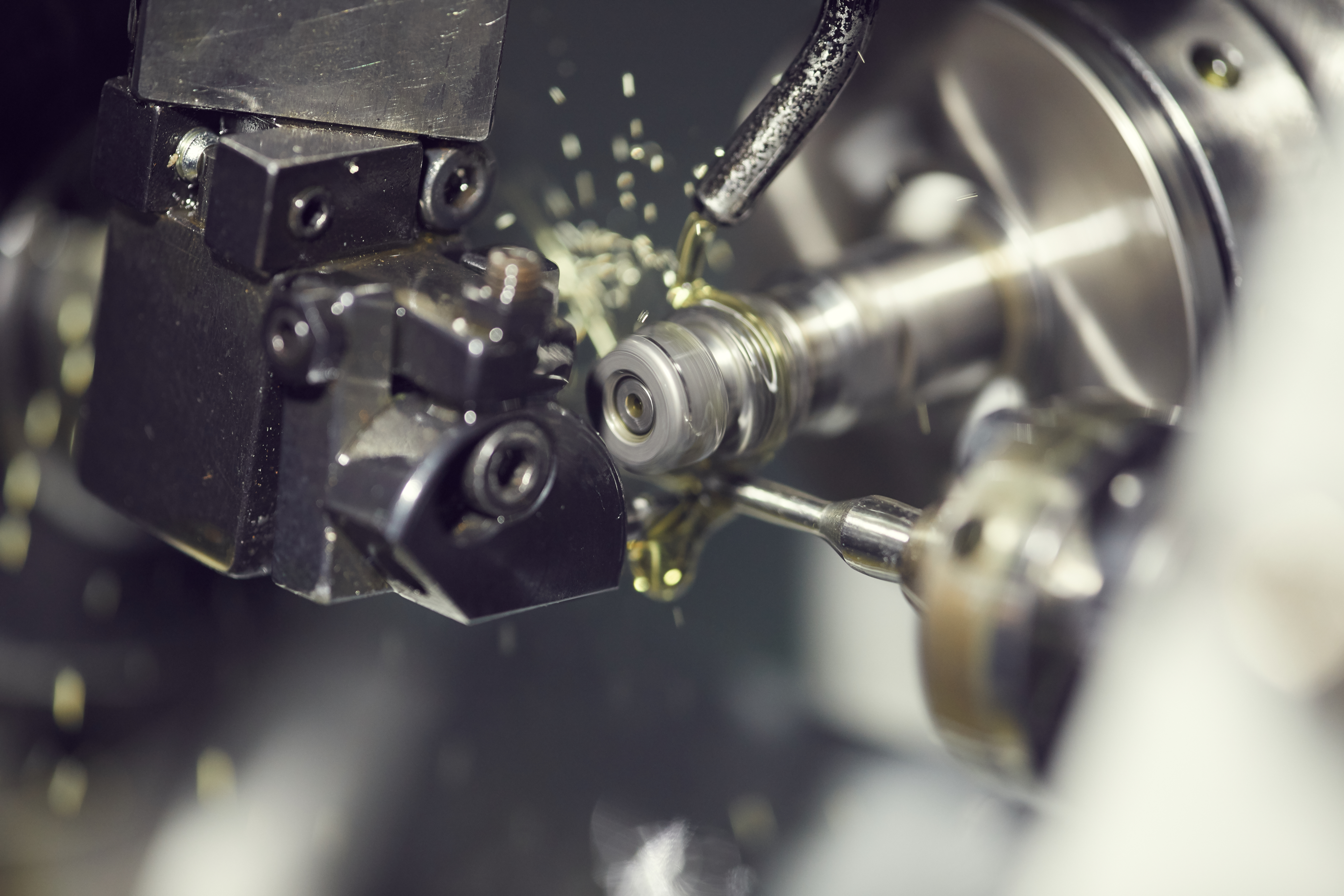
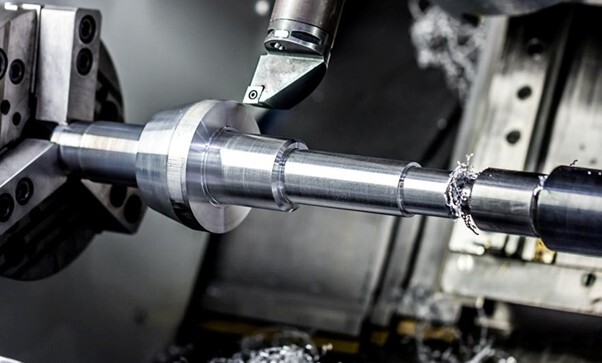
The fundamental distinction between CNC turning and milling lies in which part of the machine moves. In CNC turning, the workpiece rotates at high speeds while a stationary cutting tool removes material.
This process is typically performed on a lathe and is the go-to method for creating symmetrical, cylindrical shapes.
Conversely, in CNC milling, the workpiece remains stationary on a bed while the cutting tool rotates at high speeds.
The tool moves along multiple axes to carve out shapes from the block of material. When deciding between CNC milling or CNC turning, the geometry of your part is the primary deciding factor.
By rule of thumb, if the part is round or cylindrical, you turn it. If it's flat or boxy, you mill it.
When CNC Turning is the Right Choice?
For manufacturers of bespoke machines, CNC turning is the most efficient way to produce rotational components.
Because the part rotates on a central axis, it is exceptionally easy to maintain concentricity, ensuring that all features of the part are perfectly centered.
You should choose CNC turning for:
- Shafts and Axles: Where rotational balance is critical.
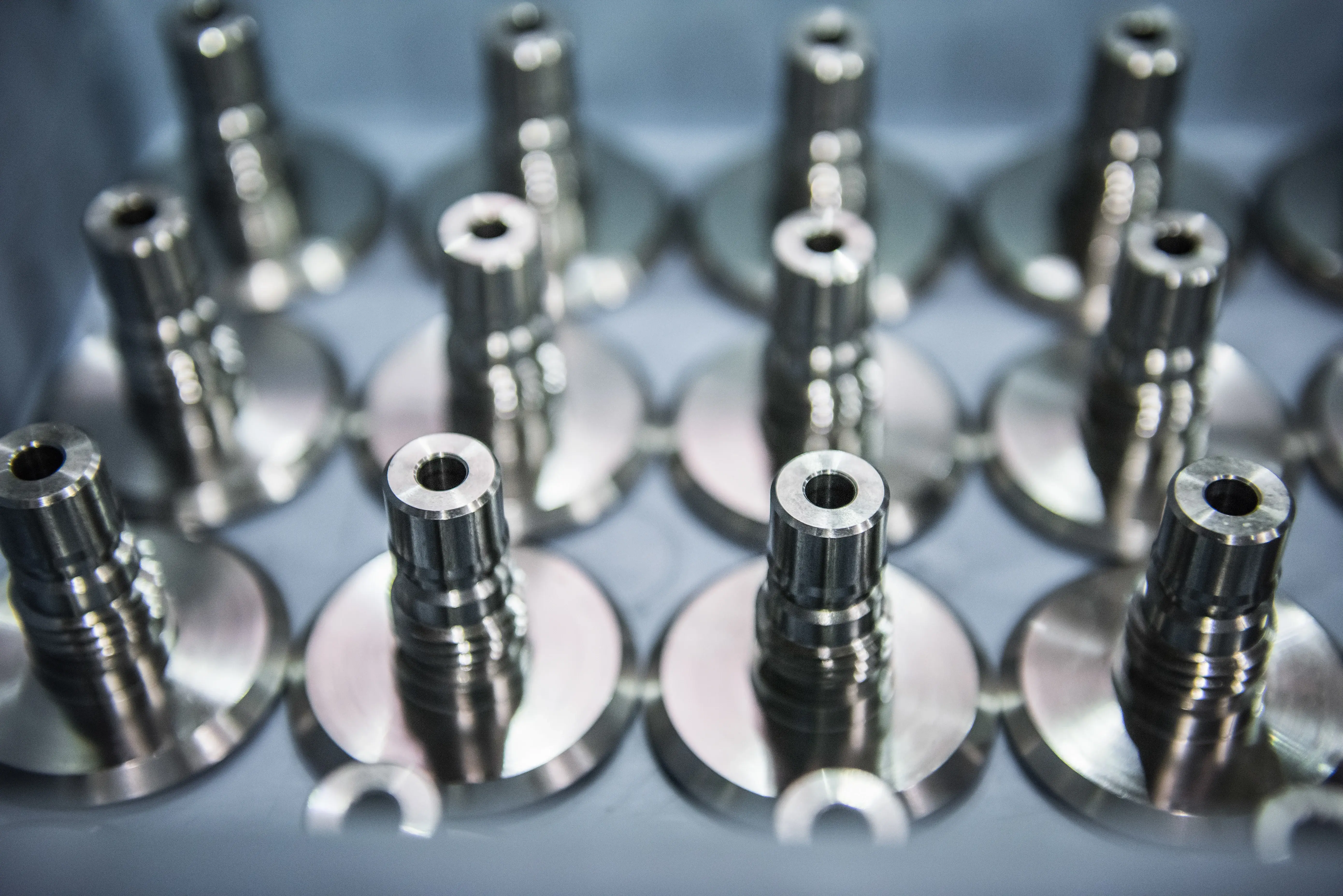
- Pins and Bushes: Which require smooth finishes and precise outer diameters.
- Fasteners: Specialised bolts or threaded components.
If your part is cylindrical, turning is almost always faster and more cost-effective than milling because the tool is in constant contact with the workpiece, leading to rapid material removal.
When CNC Milling is the Better Option?
If your component features flat surfaces, pockets, holes, or complex "organic" shapes that aren't symmetrical, CNC milling is the superior choice.
Milling machines can operate on three, four, or even five axes, allowing the tool to reach different faces of a part without the need for multiple setups.
For bespoke machine builders, milling is often used for:
- Engine Blocks or Manifolds: Which feature complex internal geometries.
- Brackets and Plates: Flat components with specific hole patterns.
- Intricate Profiles: Including parts that require slots, grooves, or aesthetic contouring.
When comparing CNC turning vs CNC milling, milling offers more versatility for non-rotational parts, though it may require more complex programming and setup time.
Tolerances and Functional Requirements
In the world of bespoke engineering, precision is non-negotiable. The choice between these processes often comes down to where your tightest tolerance lies.
Turning excels at roundness. If you need a shaft to fit into a bearing with a clearance of only a few microns, the lathe is your best friend. It provides superior surface finishes on outer diameters.
Milling, however, is better for positional accuracy. If you have a series of holes on a flat plate that must align perfectly with another component, the milling machine’s ability to move precisely across a coordinate system makes it the ideal tool.
Production Efficiency and Batch Size
Selecting the process that matches the natural shape of the part does more than just ensure quality; it improves lead time reliability. When a part is matched to the correct process, cycle times are reduced. This is particularly important for small to medium batches often found in bespoke machine manufacturing, where setup costs can significantly impact the final price per part.
By utilising the correct method, we minimise waste and reduce the number of times a part needs to be handled, which helps keep your project on schedule and within budget.
When Both Processes are Required?
In many cases, the answer to "CNC milling or CNC turning?" is not necessarily one or the other, but both.
Modern bespoke parts often feature a mix of rotational and prismatic elements. An example of this might be a cylindrical shaft with a flat keyed slot or a series of off-centre drilled holes.
This is where "Mill-Turn" centres or sequential machining come into play.
Working with a supplier like JR Gilbert, who offers both processes, simplifies your procurement. It ensures that the transition between the lathe and the milling machine is seamless, maintaining the integrity of the difference between CNC milling and CNC turning and ensuring the final part meets every specification.
If you are unsure which method is best for your next project, our experienced team is here to help you optimise your designs for manufacturing. Contact us today to discuss your project requirements

Image Source: Envato
The Key Advantages of CNC Turning in Precision Engineering
Large Capacity Needs: The Advantages Of A CNC Lathe
No Comments Yet
Let us know what you think